

13 Feb 26

Smart Thermostats & Inverter HVAC: How to Get Integration Right & Inverter HVAC: How to Get Integration Right
Smart thermostats are often the first smart home device homeowners install. They promise energy savings, app-based control, voice assistant integration, and access to incentives through utility demand response programs.
However, when smart thermostats are paired with modern Inverter-driven HVAC systems—such as VRF units, mini-splits, and heat pumps—installation and performance challenges can emerge.
This guide explains how smart thermostat adoption is evolving, why homeowners choose third-party thermostats, where integration commonly fails with Inverter HVAC systems, and how proper control integration preserves comfort and efficiency.
Smart Thermostat Adoption Trends
Smart thermostat adoption continues to grow across residential and light commercial environments. Today, around one in six U.S. households have a smart thermostat, with increasing uptake in professional installations.
Common use cases include:
- Residential homes, where smart thermostats add intelligence to existing or new HVAC systems
- New construction and MDUs, where builders and property managers treat smart thermostats as a standard feature
- Hospitality applications, where thermostats support energy management and remote monitoring
- Light commercial properties, where smart thermostats enable system visibility and participation in utility incentive programs
Notably, more smart thermostat buyers are opting for professional installation. Today, smart thermostat installation sits at about 50/50 DIY versus professional, and the share of professional installs has grown year after year as consumers prioritize correct setup, system compatibility, and smooth integration.
Why Do Customers Choose Smart Thermostats?
The appeal of smart thermostats goes well beyond basic scheduling:
- Energy and Cost Savings - Smart thermostats reduce energy use by optimizing runtimes, limiting unnecessary operation, and responding to occupancy and weather conditions.
- Remote and Voice Control – App-based control and voice assistant integration allow homeowners to adjust comfort settings remotely or integrate HVAC into daily routines.
- Utility Program Compatibility - Many utilities require approved smart thermostats for participation in demand response or time-of-use pricing programs, making thermostat selection a prerequisite for incentives.
Because of these factors, thermostat choice is often driven by smart home ecosystem compatibility or utility program requirements, rather than HVAC system design. As a result, air handling unit compatibility is frequently overlooked – which can lead to unpleasant surprises.
Where Smart Thermostat Integration Breaks Down with Inverter HVAC
Problems arise when a smart thermostat is connected directly to Inverter-driven HVAC equipment without an appropriate control integration interface.
The Control Mismatch Explained
Inverter-driven systems rely on proprietary manufacturer protocols to continuously modulate capacity. This technology lets Inverter AHUs match output to demand more accurately, making them more efficient and keeping occupants more comfortable. Most third-party smart thermostats, however, communicate using simple on/off or stage-based logic. This is fundamental to how smart thermostats work in traditional setups, but it creates a conflict when applied to modulating Inverter systems.
When connected directly to a third-party smart thermostat, Inverter AHUs often lose their ability to modulate, effectively behaving like a single-speed system.
Why This Matters
This loss of functionality has real-world consequences:
- Reduced efficiency and higher energy consumption
- Increased temperature swings and reduced comfort
- Failure to respond to demand response events
Although smart thermostats and Inverter HVAC systems are designed for efficiency, improper integration can cause the combined system to perform worse than either technology alone.
Why Smart Thermostat Mismatch Is a Problem for Installers
For HVAC professionals, these integration issues affect performance, impact customer satisfaction, and create a long-term service burden.
Installers are often caught between:
- A homeowner who insists on a specific smart thermostat
- A manufacturer whose equipment requires native communication
- A system that technically “works” but performs poorly
Without the right integration strategy, installers may face repeated service calls and dissatisfied customers, even when equipment selection was otherwise sound.
How Airzone Makes Smart Thermostat Integration Work
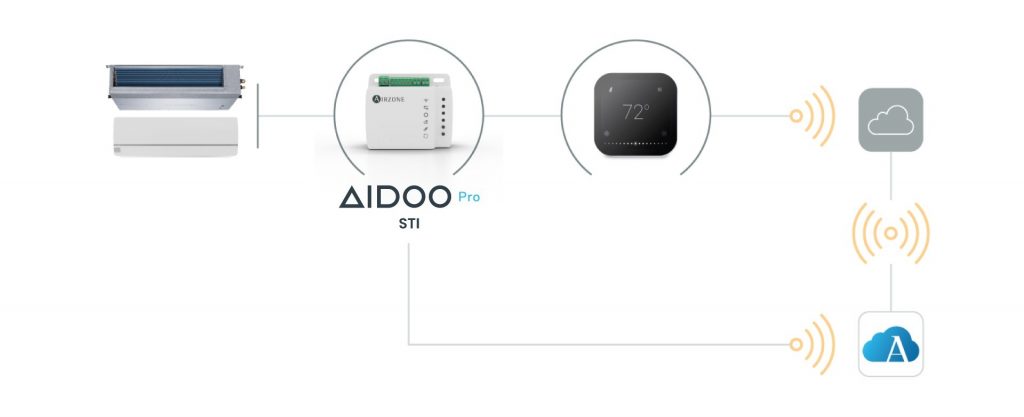
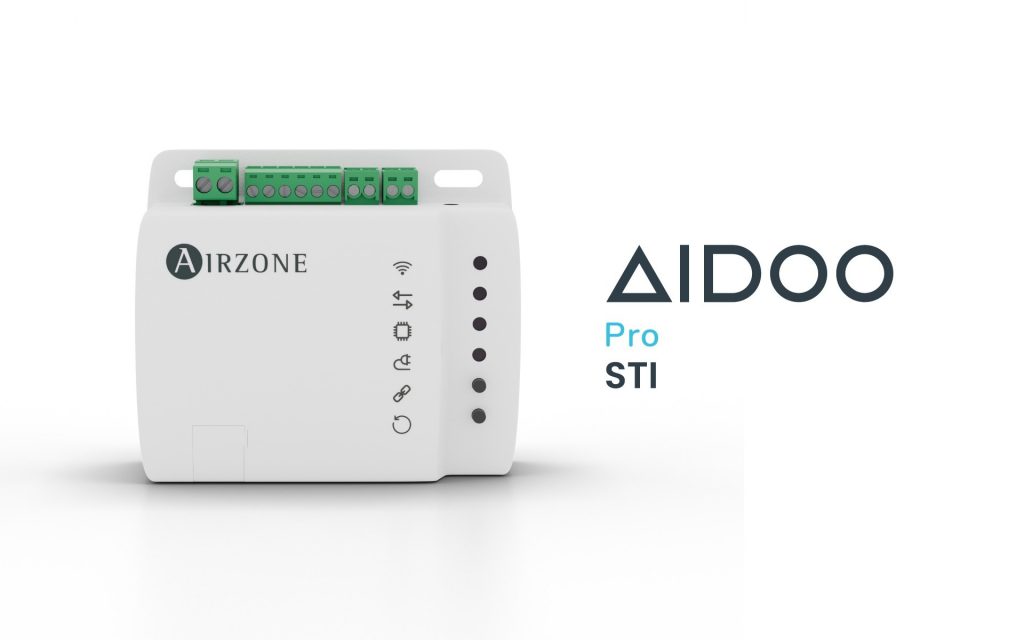
Airzone solves this challenge with the Aidoo Pro, a plug and play control integration gateway designed to connect Inverter AHUs to smart thermostats and IoT platforms. Aidoo Pro enables Open API cloud integration with leading smart thermostat and home/building automation platforms, allowing third-party services to control and monitor Inverter AHUs. Airzone leverages an exclusive library of manufacturer protocols to make sure those commands are executed with no loff on Inverter functionality.
For installers and homeowners asking how to make your air conditioner smart without losing efficiency, this control integration gateway connects Inverter AHUs to smart thermostats and IoT platforms seamlessly.
Preserving Native HVAC Performance
Airzone Aidoo Pro is a simple system add-on that sits between the smart thermostat and the AHU, translating thermostat commands into manufacturer-native protocols. This preserves variable-speed operation, modulation, and efficiency.
Airzone Aidoo Pro enables compatibility with leading third-party smart thermostats while maintaining full Inverter functionality. Homeowners keep the interface they want, while the HVAC system operates as designed.
One Strategy for Any Project
Whether the thermostat is a standalone smart device or part of a broader home or building automation platform, Airzone Aidoo provides consistent, future-proof HVAC control integration.
Airzone Aidoo Pro is compatible with leading Inverter manufacturers, smart thermostats, voice assistants, control systems and home/building automation platforms. There’s an Aidoo Pro that’s right for every Inverter-driven HVAC project.
Airzone makes it easy to find the right Aidoo Pro for your project with the Aidoo Pro lookup tool at the bottom of the product page. Enter the AHU brand and model number to find a compatible Aidoo Pro device.
Contact your Airzone Sales Rep to order.
Thermostats Are Only as Smart as Their Integration
Smart thermostats deliver real value, but only when they’re integrated properly. For inverter-driven HVAC systems, direct connections often undermine the very benefits homeowners expect.
With Airzone Aidoo Pro, homeowners get the flexibility of third-party smart thermostats, utilities get reliable demand response participation, and installers get systems that perform as intended.
Smart comfort doesn’t come from the thermostat alone. It comes from making every layer of the system work together.